
Apostille vs Embassy Attestation: Key Differences
Discover the differences between apostille and embassy attestation. Learn which one you need for your documents and ensure compliance with international requirements. "apostille vs embassy attestation"
11/27/20257 min read
Introduction to Apostille and Embassy Attestation
In an increasingly interconnected world, the need for robust document verification methods has never been more critical. Two significant processes that facilitate the international recognition of documents are apostille and embassy attestation. Both methods serve to validate a document's authenticity, ensuring that it can be accepted across borders without dispute. However, they operate under different frameworks and are applicable in distinct scenarios.
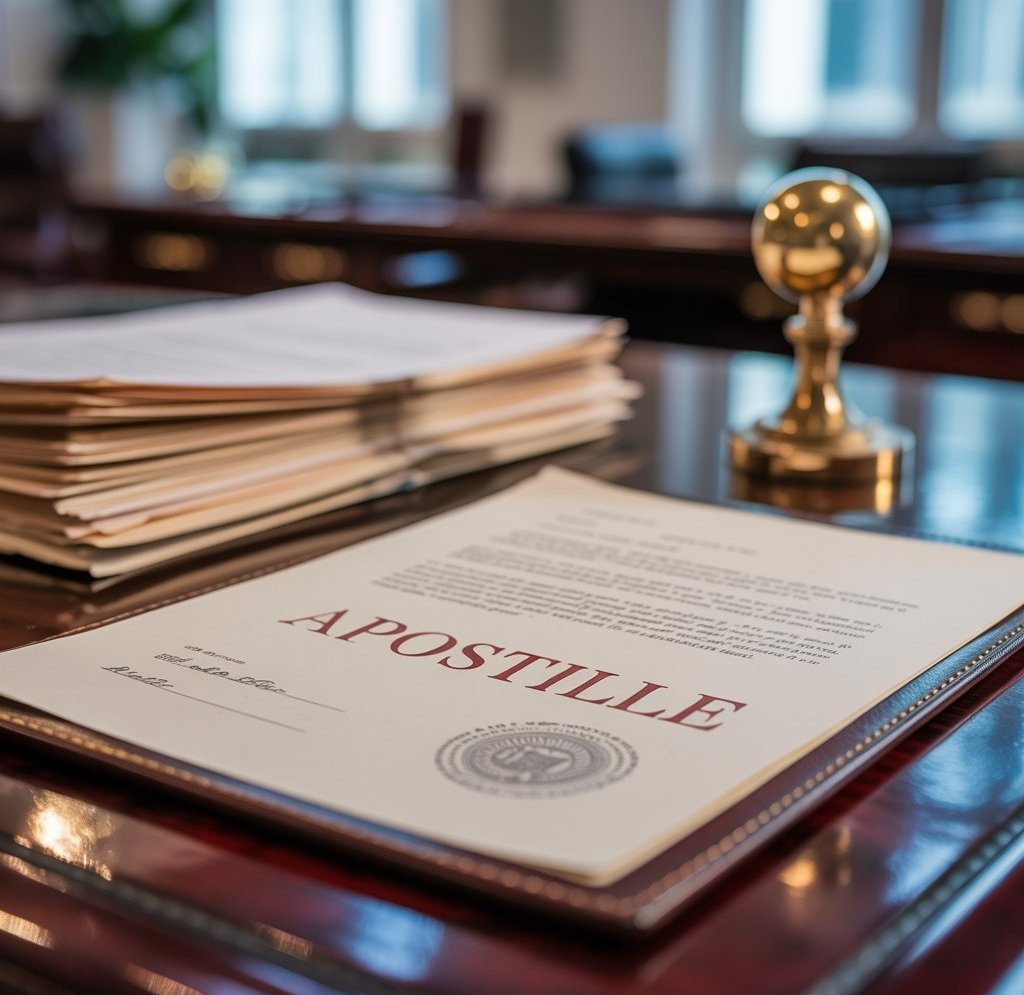
An apostille is a certification provided under the 1961 Hague Convention, designed to simplify the process of document verification for countries that are part of this treaty. Essentially, it confirms the authenticity of the signatures, seals, and stamps on public documents issued in one signatory country to be used in another. This process is pivotal for individuals and organizations involved in international transactions, educational pursuits, and legal matters, ensuring that their documents, ranging from birth certificates to corporate papers, are recognized in foreign jurisdictions.
On the other hand, embassy attestation is a procedure that involves the consular services of an embassy or consulate, typically required for documents intended for use in countries that are not part of the Hague Convention. This process entails validating documents through the embassy of the country in which the document will be used. This can include legal documents, academic certificates, and any paperwork necessary for immigration or employment abroad. The embassy acts as a bridge, confirming the validity of the documents while adhering to the legal standards of the host country.
Understanding the nuances between apostille and embassy attestation is paramount for anyone navigating international requirements. As we delve deeper into this topic, we will uncover the specific differences, applications, and scenarios in which each method is necessary, providing clarity for individuals and organizations alike.
What is Apostille?
An apostille is a specialized form of certification that enables documents to be authenticated for international use without the need for further verification by foreign authorities. This process originated from the Hague Convention of 1961, which streamlined the procedure for certifying documents circulated between member countries. The convention currently includes over 120 signatory countries, simplifying the legal process for individuals and organizations that require their documents to be recognized globally.
The types of documents that can receive an apostille include various official papers, such as birth and marriage certificates, university diplomas, police records, corporate documents, and powers of attorney. Essentially, any document that may need to be presented to an authority in a foreign country can be apostilled, provided it is issued by a government entity or a recognized institution.
Obtaining an apostille generally involves several clear steps. First, the document must be prepared, ensuring it is signed and dated by the appropriate authority. Next, the individual or organization seeking the apostille must submit the original document along with the necessary application forms to a designated authority in their country, commonly the Secretary of State or a similar office. Upon review, if everything is in order, the authority attaches an apostille certificate to the document, which generally includes details such as the country of origin, the type of document, and the issuing authority. The apostille serves to confirm the legitimacy of the document, thus facilitating its acceptance in countries that participate in the Hague Convention.
This streamlined process allows for a more efficient authentication of documents, making it essential for individuals engaging in international affairs or those needing to present official papers abroad. Ultimately, the apostille serves as a crucial tool for legal and administrative verification across borders.
What is Embassy Attestation?
Embassy attestation is a formal process through which an embassy or consulate verifies the authenticity of documents intended for use in another country. This procedure plays a critical role in international legal matters, ensuring that documents such as birth certificates, marriage licenses, diplomas, and commercial contracts are recognized and accepted outside the issuing nation. It serves as a guarantee that such documents are genuine and have been issued by the appropriate authority.
The embassy or consulate verifies the document's authenticity by examining the signatures, stamps, and seals, confirming that they are legitimate. This process often involves contacting the issuing authority to validate the information provided. The necessity for embassy attestation arises from the need for countries to maintain a secure and trustworthy environment for legal transactions, thereby bolstering international relations and trade.
To initiate embassy attestation, individuals must first gather the documents that require verification. It is essential to confirm the specific requirements of the foreign country regarding document attestation, as these can vary widely. In most cases, the process begins with obtaining an official notarial certificate or a legal verification from the relevant local authority. Once this initial step is completed, the documents can be submitted to the embassy or consulate for further verification. The processing time may differ between embassies, and it is advisable to check for any fees associated with the attestation process.
Overall, embassy attestation serves an important function in facilitating international legal processes. By providing a means of authenticating documents, it ensures a level of trust that is crucial for cross-border interactions. Understanding the embassy attestation process and its significance can help individuals navigate international legal requirements more effectively.
Key Differences Between Apostille and Embassy Attestation
The processes of apostille and embassy attestation serve to authenticate documents for international use, yet they differ significantly in various aspects. Understanding these differences is essential for individuals or entities seeking to determine which process best suits their needs.
One of the primary distinctions lies in the jurisdiction of each method. An apostille is recognized under the Hague Convention of 1961, which simplifies the authentication of documents between countries that are signatories. Those countries accept apostilled documents without additional verification. In contrast, embassy attestation is utilized when documents need validation from the embassy or consulate of a specific country, particularly for nations that are not part of the Hague Convention. This implies that embassy attestation is often broader in scope but can require additional steps, as non-member countries may impose their unique requirements.
Further differences arise regarding the types of documents applicable to each procedure. Apostilles are typically issued for public documents, such as birth certificates, marriage licenses, and educational diplomas. Conversely, embassy attestation encompasses a wider range of documents, including commercial contracts, business registrations, and other private or corporate papers, which may not necessarily be accepted by the apostille method.
Geographical limitations also play a crucial role; apostille can only be utilized in countries that are signatories to the Hague Convention, while embassy attestation can typically be performed worldwide for any nation with a diplomatic representation. Processing times can vary significantly depending on the chosen method; apostille procedures may be expedited in some jurisdictions, while embassy attestation often entails longer wait periods due to the verification process involved, along with potential consular appointment requirements.
Lastly, cost considerations should not be overlooked. Apostille fees can be less expensive than embassy attestation. Since the latter often requires dealing with specific embassies, costs can escalate with processing time and service charges included. Identifying the right option depends on various factors, including the type of document and the intended country of use.
When to Choose Apostille Over Embassy Attestation
Apostille is a form of authentication that is particularly relevant for countries that are signatories to the Hague Convention of 1961. If you are dealing with international documentation for a country that is a member of this convention, it is essential to understand the scenarios in which you should choose apostille over embassy attestation.
One primary situation where apostille is required is when you need to present legal documents, such as birth certificates, marriage certificates, or academic diplomas, in a foreign country that has joined the Hague Convention. These documents are often required for various legal procedures, such as applying for jobs, enrolling in educational institutions, or completing immigration processes. For instance, if an individual plans to study in a European country, obtaining an apostille for their academic transcripts may be necessary.
Moreover, business documents, including contracts and corporate registration papers, may also require an apostille when submitted to a foreign entity. This ensures that the documents will be recognized and accepted legally abroad. It is worth noting that apostille services can vary by state or jurisdiction, so ensuring that the document is in compliance with the specific requirements of the destination country is crucial.
While embassy attestation may be suitable for non-Hague countries, choosing apostille is advisable when dealing with signatory nations. It is essential to verify the requirements of the specific country you are engaging with, as the need for additional verification or specialized forms may exist. By understanding when to opt for apostille, individuals and businesses can streamline their documentation process and ensure their legal papers are universally accepted in international affairs.
When to Choose Embassy Attestation Over Apostille
In the realm of document legalization, determining whether to opt for embassy attestation or apostille is crucial, particularly when dealing with international legal processes. One primary situation where embassy attestation is necessary arises when the destination country is not a signatory of the Hague Convention. In such cases, apostille services cannot be applied, thus necessitating the engagement of the respective embassy or consulate to authenticate documents.
Additionally, a variety of documents may require embassy attestation. For example, legal documents such as marriage certificates, birth certificates, and educational transcripts often fall under the purview of embassy services when intended for use abroad. These documents must undergo a thorough verification process to ensure they meet the legal standards of the destination country, which may not be achievable through apostille alone.
Furthermore, certain types of documents, such as powers of attorney and affidavits, typically require embassy attestation, particularly if they are to be utilized in jurisdictions that have specific documentation requirements. In these instances, engaging with the embassy not only ensures compliance with local laws but also provides an added layer of verification that may be necessary for legal acceptance.
Moreover, in scenarios involving government agencies or institutions that mandate higher scrutiny, embassy attestation can be the preferred method of document verification. For example, when working with immigration processes, visa applications, or international business agreements, having an embassy’s validation can significantly enhance the acceptance of documents by foreign authorities.
Overall, recognizing the appropriate circumstances for embassy attestation over apostille can streamline the process of document legalization, ensuring that necessary legal requirements are fulfilled efficiently and effectively.
Conclusion and Final Thoughts
Understanding the distinction between apostille and embassy attestation is essential for individuals and organizations that frequently engage in international documentation processes. Apostille is a simplified form of authentication used primarily among countries that are signatories to the Hague Convention. It certifies the legitimacy of a document for use in another country, ensuring a streamlined process when dealing with international affairs. In contrast, embassy attestation entails a more complex verification process involving the embassy or consulate of the destination country, which may be necessary for countries that are not part of the Hague Convention.
Each method serves a distinct purpose and is applicable in varying scenarios. When determining whether apostille or embassy attestation is needed, it is crucial to consider the specific requirements of the document and the countries involved. For documents intended for countries that accept the apostille, this method is generally faster and more economical. Conversely, if a document needs to be presented in a country that does not recognize apostille, embassy attestation remains the appropriate choice.
For those seeking to navigate the complexities of international documentation, clear guidance is vital. Engaging legal or notary services can help ensure that the correct form of verification is obtained. It is also advisable to consult with the relevant authorities or embassies beforehand to determine the specific requirements for your documents. By taking these steps, you can adequately prepare for international dealings, thereby safeguarding your documents for seamless use abroad.