
Unlocking Borders: The Full List of Apostille Convention Countries in 2025
7/15/20254 min read
Understanding the Apostille Convention
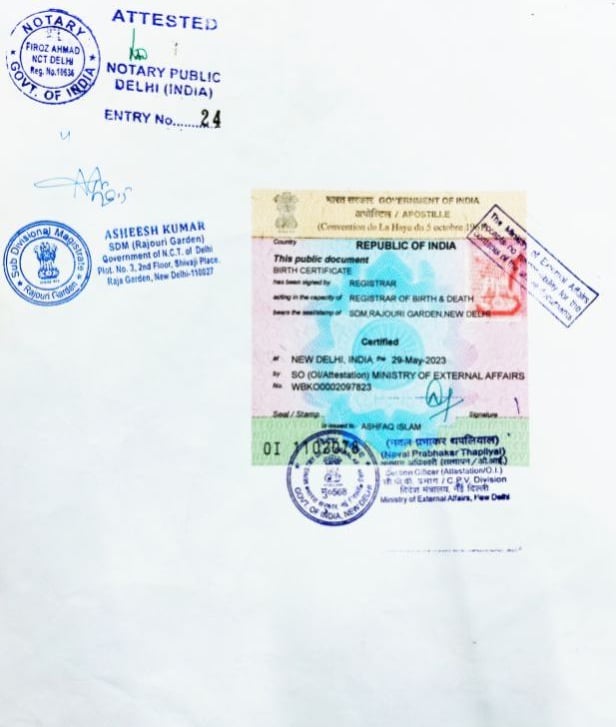
The Apostille Convention, formally known as the Hague Convention Abolishing the Requirement of Legalization for Foreign Public Documents, was established on October 5, 1961. This international treaty aims to simplify the process of recognizing public documents from one country for use in another. It serves as a significant legal tool to facilitate international transactions and communication by eliminating the traditional, complex legalization requirements that often involve numerous bureaucratic steps.
The core purpose of the Apostille Convention is to streamline what is often a cumbersome process for individuals and businesses looking to utilize public documents abroad. Under this convention, member countries agree to accept documents that have been certified with an apostille—a special form of validation that verifies the authenticity of the public document and the authority of the official who issued it.
The significance of the apostille in both legal and business contexts cannot be overstated. In the realm of international business, the apostille allows companies to present contracts, certificates, and other critical documents in a universally accepted format, thereby fostering smoother cross-border operations. For individuals, the apostille is essential for personal documents such as marriage certificates, birth certificates, and academic transcripts needed for immigration, employment, or schooling in another country.
One of the primary advantages of the Apostille Convention is the reduction in bureaucratic barriers, which expedites the process of document recognition. Before the convention, individuals were required to navigate a labyrinth of legalizations through embassies and consulates, which was not only time-consuming but also expensive. The implementation of the apostille has effectively eliminated redundant layers of verification, allowing for more efficient international cooperation and legal processes.
The Impact of Apostille on Global Mobility
The Apostille Convention, established in 1961, plays a significant role in promoting global mobility for individuals and businesses by simplifying the authentication of documents. This international treaty allows countries to accept documents that have been certified by an apostille, thus eliminating the need for further validation and ensuring mutual recognition of official documents. As of 2025, the increasing number of countries adopting the apostille process greatly enhances the ease with which people can travel, work, and engage in international trade.
For individuals, obtaining employment abroad has become significantly easier due to the streamlined document verification provided by the apostille. For instance, when a professional is issued an employment contract in a foreign country, their qualifications and degrees can be quickly validated through an apostille. This efficiency not only reduces the time required for hiring processes but also encourages cross-border employment opportunities. The transparency and trust established through the apostille system foster a more competitive job market for expatriates.
In the realm of education, students seeking to study overseas are faced with numerous documentation requirements. The apostille simplifies this process. For example, a high school transcript or a university diploma from one apostille member country can be easily recognized in another, eliminating bureaucratic hurdles. As a result, students are empowered to pursue educational opportunities in various parts of the world without the fear of their documents being deemed invalid.
Moreover, the implications of the apostille extend to trade and commerce. Businesses engaged in international transactions benefit from reduced complexity in validating contracts and agreements. The apostille facilitates faster negotiations and enhances trust in business relations, thereby promoting an environment conducive to international collaboration. Through real-life scenarios, it is evident that the apostille convention is integral to enhancing global mobility and fostering stronger international ties across various sectors.
The Complete List of Apostille Countries in 2025
The Apostille Convention, formally known as the Hague Convention of 5 October 1961, simplifies the process of certifying documents for international use. As of 2025, there are a total of 123 countries that are parties to this agreement. Among these, several countries have made significant strides in enhancing their documentation processes to facilitate smoother international transactions.
Starting with Europe, some of the prominent countries include Austria, Belgium, France, Germany, and Italy. Each of these countries has established efficient Apostille services, allowing for a straightforward verification process. Notably, countries such as Switzerland and Spain have recently updated their procedures to provide quicker turnaround times for Apostille requests.
In the Americas, both the United States and Canada are included in the list, along with numerous Caribbean nations. The U.S. has several state-specific protocols for obtaining Apostilles, reflecting a decentralized approach. Likewise, in South America, countries like Argentina, Brazil, and Chile have adopted the Apostille system, promoting easier legal processes for cross-border document usage.
In the region of Asia, countries such as Japan, South Korea, and the Philippines are part of the convention. Japan, in particular, has seen a growing number of international transactions, thus enhancing its Apostille framework to accommodate this increase. In the Middle East, countries like Israel and the United Arab Emirates are also signatories, improving their diplomatic and legal interactions with other nations.
Finally, in Africa, nations like South Africa and Morocco stand out as members, demonstrating a commitment to enhancing legal frameworks for international cooperation. With ongoing discussions about further expanding the convention's reach, it will be essential for stakeholders to keep abreast of any additional countries that may join this influential agreement in the coming years.
Future Implications and Developments in Apostille Practices
As we look toward the future of the Apostille Convention and its implementation, it becomes evident that the landscape of document legalization is poised for considerable change. The Apostille Convention has established a streamlined process for the authentication of documents amongst member states, fostering international cooperation and legal acceptance. However, with global trends leaning towards digitalization and increasingly interconnected economies, we can anticipate several developments that may shape its future.
One significant trend is the push for the digitization of apostille processes. Many countries are exploring the integration of technology in legal documentation, which could simplify the issuance of apostilles by allowing electronic signatures and virtual certifying processes. This modernization initiative aims to enhance efficiency while reducing the time and costs associated with traditional methods of document legalization.
Furthermore, there is a growing interest among non-member countries to join the Apostille Convention. As globalization continues to facilitate cross-border activities, nations recognize the importance of adhering to standardized document authentication practices. This potential expansion may lead to greater international collaboration, drawing more countries into a unified framework that ultimately eases administrative burdens for individuals and businesses alike.
Another aspect to consider is the impact of international relations on apostille practices. Political changes can significantly influence the willingness of countries to participate in or adapt to the standards set by the Apostille Convention. Keeping abreast of geopolitical developments will be essential for stakeholders involved in international documentation to navigate any shifts that may arise.
In conclusion, the future of the Apostille Convention is bright, characterized by technology-driven improvements, potential expansion among non-member countries, and an evolving political landscape. By staying informed about these trends and developments, readers can better prepare for the changes that may affect their document legalization processes in the years to come.