
How to Get MEA Apostille and Embassy Attestation in India: A Step-by-Step Guide
8/19/20255 min read
Understanding Apostille and Embassy Attestation
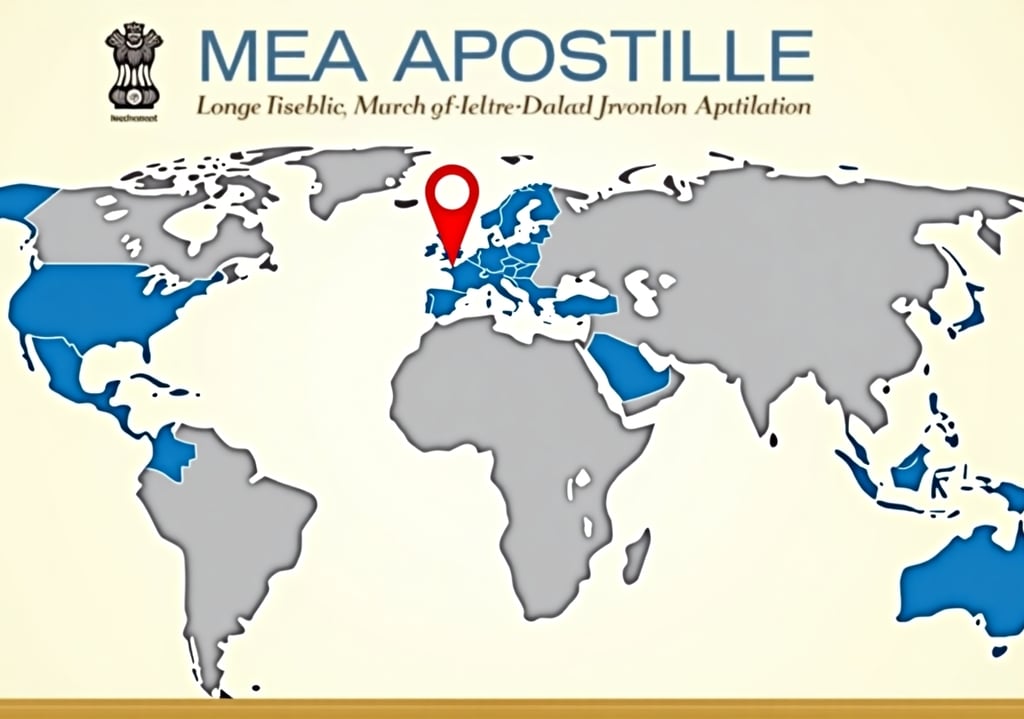
Apostille and embassy attestation are two crucial processes that validate the authenticity of documents for international use, particularly in the context of Indian documents intended for foreign jurisdictions. An apostille is a form of certification provided under the Hague Convention of 1961, which simplifies the process of verifying documents to be used abroad. It is accepted in all member countries of this convention, thus ensuring that documents such as birth certificates, educational degrees, or marriage licenses are recognized without further authentication by foreign authorities.
Embassy attestation, on the other hand, involves the verification of documents by the embassy or consulate of a specific country in India. This process is necessary for documents that require acknowledgment by the particular country's government before they can be utilized for legal purposes abroad. Unlike apostille, embassy attestation is typically required for countries that are not signatories to the Hague Convention, necessitating a different approach for document verification.
The importance of these processes lies not only in their legal significance but also in their role in facilitating international engagements. Each process serves a distinct purpose; for example, apostille is generally more straightforward and faster for documents intended for countries adhering to the Hague Convention, while embassy attestation may involve additional steps and timelines depending on the specific consulate's requirements.
Understanding when to utilize apostille versus embassy attestation is essential for individuals and businesses alike. If an Indian document is proposed for use in a Hague member state, apostille is the most efficient route. Conversely, if the destination country is not a member, embassy attestation becomes imperative. Recognizing these differences ensures that individuals can navigate the complexities of document verification efficiently, allowing for smoother transactions and enhanced credibility of their documents internationally.
Documents Required for Apostille and Embassy Attestation
To successfully obtain MEA apostille and embassy attestation in India, it is vital to gather a specific set of documents tailored to your needs. The types of documents required generally fall into three major categories: personal, educational, and commercial documents. Each type plays a significant role in various applications, whether for work, study, or legal purposes abroad.
Firstly, personal documents are essential. This category typically includes items such as your passport, birth certificate, marriage certificate, and any other relevant identification documents. Your passport, which serves as proof of identity and citizenship, is particularly important, as it will be required throughout the entire attestation process. Birth certificates may also be necessary, especially when you are applying for a visa for educational purposes or family reunification.
Secondly, educational documents are crucial if you are seeking to attest degrees or certificates for study or employment overseas. The required educational documents may consist of your degrees, diplomas, and transcripts, along with any other academic certifications. It is advisable to ensure that these documents are properly verified by their issuing institutions prior to submission for apostille or attestation. Proper verification can expedite the process and eliminate potential delays.
Lastly, commercial documents may be required for business-related purposes, including agreements, contracts, and other business papers. If you are involved in business dealings abroad, securing the proper attestation of these documents is imperative for their legal validity in the foreign country. It is advisable to prepare these documents with clarity, ensuring they are duly signed and sealed as needed.
In preparation for the attestation process, all documents must be in their original form, along with several photocopies, to ensure smooth verification and processing. It is essential to double-check that your documents adhere to the specific requirements set forth by the MEA and the respective embassies, as failure to comply may lead to delays or rejections.
Step-by-Step Process for Obtaining MEA Apostille
Obtaining an apostille from the Ministry of External Affairs (MEA) in India is an essential process for validating documents intended for use abroad. The procedure can be complex, yet understanding the steps involved significantly eases the process. Here, we outline the key stages you should follow to secure an MEA apostille successfully.
The first step involves verifying your documents. Ensure that you have the necessary paperwork, which could include educational certificates, marriage certificates, or any other official documents requiring authentication. It is advisable to have these documents attested by a Notary Public or a designated local authority before proceeding to the MEA. This preliminary verification solidifies the authenticity of your documents and is crucial for the subsequent stages.
Once the documents are verified, the next step is to make a formal application to the MEA. You need to submit your verified documents along with a completed application form. This application can typically be submitted at designated MEA offices or through authorized agents. Payment of the applicable fee, which varies depending on the document type and service requirement, is also necessary at this stage. Keep in mind that cash payments may not be accepted; it is often advisable to pay via demand drafts or online payment methods.
After submission, the documents will undergo a thorough verification process at the MEA. This period can take anywhere from a few days to a few weeks, depending on the volume of applications. To avoid delays, ensure that all paperwork is complete and accurate prior to submission. During this period, it is wise to maintain a copy of your submission receipt for reference.
Finally, upon successful verification, your documents will be apostilled. Collect the apostilled documents from the MEA office or wait for them to be dispatched if you opted for a courier service. It is crucial to check the documents for accuracy immediately upon receipt. Following these steps diligently will facilitate a smoother experience when obtaining an MEA apostille in India.
How to Get Embassy Attestation in India: A Practical Guide
Obtaining embassy attestation in India is a critical step for validating your documents, particularly when these documents are to be used abroad. The procedure can be daunting, but with a practical guide, it becomes more manageable. The first step is to identify the appropriate embassy or consulate for your specific needs. This usually depends on the country where the documents will be used. You can find this information online through official government websites or by contacting the Ministry of External Affairs (MEA) in India.
Once you have located the embassy or consulate, you must carefully review their specific attestation requirements. Different embassies might have varying document requirements, processing fees, and timelines. After gathering all necessary documents, including proof of identity and the original documents requiring attestation, you can proceed to the application process. Many embassies offer online appointment scheduling, which can help save time. If an appointment is not available online, it is advisable to visit the embassy during working hours for further assistance.
While communicating with embassy staff, it’s essential to remain respectful and clear about your requirements. Prepare a checklist of your documents to ensure nothing is missed. It is also useful to inquire about the processing times, as these can fluctuate depending on the number of applications. Typically, attestation may take anywhere from a few days to a few weeks. By staying informed and organized, you can help ensure a smooth application process. Efficient communication with the embassy staff can often facilitate quicker processing times, so don’t hesitate to ask questions when needed.
In conclusion, obtaining embassy attestation in India requires careful planning and attention to detail. By following these practical steps, you can navigate the process more efficiently, ensuring your documents are properly validated for use abroad.