
Apostille vs Embassy Attestation: Key Differences
Discover the key differences between apostille and embassy attestation for international document verification and authentication. Learn which method suits your needs best and ensure your documents are properly validated. "apostille vs embassy attestation"
10/4/20258 min read
Introduction to Apostille and Embassy Attestation
Apostille and embassy attestation are both critical processes used in the realm of document validation, particularly for international use. Understanding these two terms is essential for individuals and businesses that require legal documents to be recognized beyond their country of origin. An apostille serves as a form of certification that simplifies the legalization of documents, ensuring their acceptance in member countries of the Hague Convention. This process requires that documents be verified by a designated authority, typically the Secretary of State or a local equivalent, who authenticates the signature, seal, or stamp on the document.
On the other hand, embassy attestation involves the authentication of documents through the embassy or consulate of the destination country. This process is often necessary when an apostille is not enough, particularly when dealing with countries that are not part of the Hague Convention or have stricter document verification requirements. The embassy examines both the document and the credentials of the issuer to ensure it meets the necessary legal standards. This can include a more thorough review of the document's background and the context in which it was issued.
Both apostille and embassy attestation serve to enhance the credibility and acceptance of documents, especially in legal, educational, or administrative matters. While the processes have their distinct frameworks, they are both pivotal in ensuring that individuals and organizations can navigate the complexities of international law effectively. The choice between apostille and embassy attestation hinges on the specific requirements dictated by the country that will receive the documents, necessitating a clear understanding of both procedures for effective compliance.
What is an Apostille?
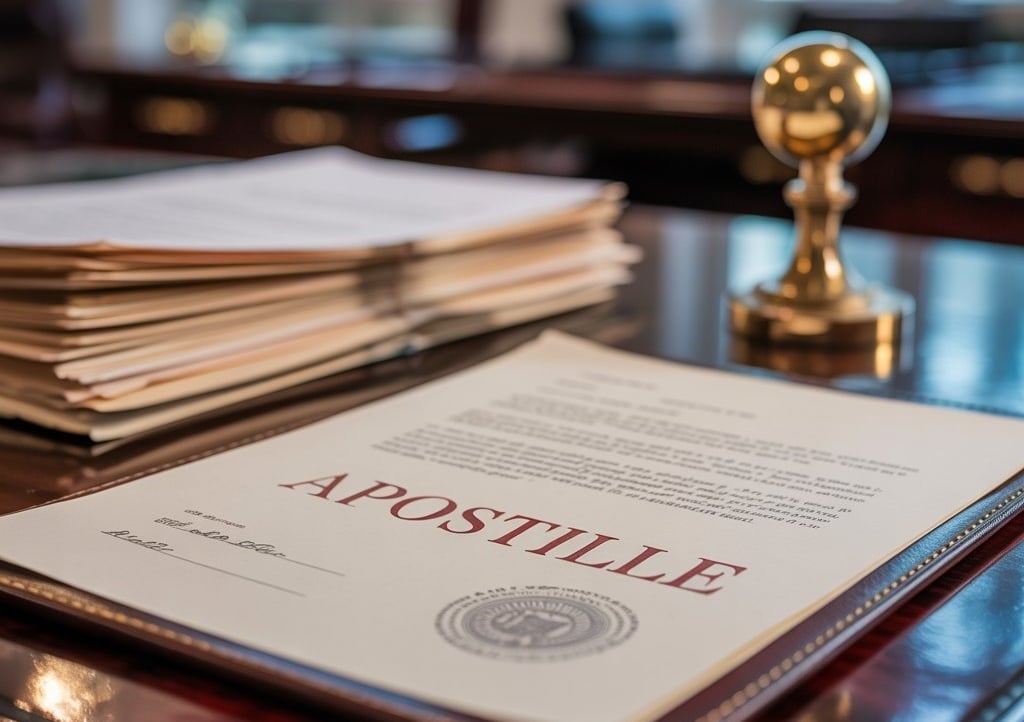
An apostille is a specialized form of authentication for legal documents that facilitates their acceptance in foreign countries. Established by the Hague Convention of 1961, this process seeks to eliminate the need for additional verification steps when documents are used internationally. The Convention aims to simplify the exchange of legal documents between member countries by standardizing the authentication procedures, thereby enhancing trust and efficiency in international legal matters.
The apostille certificate is a crucial component of this process. It serves as a verified seal or stamp that confirms the authenticity of the signature, the capacity in which the person has acted, and the identity of any capacity in which that person has acted. Importantly, the apostille does not authenticate the content of the document itself; rather, it confirms that the document has been properly executed according to the laws of the originating country.
Documents that can be apostilled include a range of legal and official papers. Common types include birth and marriage certificates, court documents, and educational diplomas. The apostille can also apply to notarized documents, thereby extending its utility across various formal needs. Each document must be submitted to the appropriate authority in the country of origin, which has the designated power to issue an apostille. The process typically involves filling out an application and paying a fee, followed by the thorough examination of the document to ensure compliance with the necessary legal standards.
In essence, obtaining an apostille is a critical step for individuals and organizations looking to use their documents abroad without facing rejection due to authenticity concerns. The Hague Convention has thus played a significant role in promoting international cooperation and understanding in legal matters, making the apostille an essential tool in global interactions.
What is Embassy Attestation?
Embassy attestation is a verification process wherein documents are authenticated by an embassy or consulate. This procedure ensures that a document issued in one country is recognized as legitimate in another. The primary objective of embassy attestation is to confirm the authenticity of signatures, seals, and stamps on official documents. It serves to assure receiving parties, including foreign governments and institutions, that the documents in question are genuine and have been duly issued by the relevant authorities.
The process of obtaining embassy attestation typically involves several steps. Initially, the document must be notarized by a qualified notary public in the country of origin. Following notarization, the document is usually submitted to the relevant government department, such as the Department of State or an appropriate ministry, to obtain an official seal or approval. After receiving this governmental authentication, the document is then taken to the embassy or consulate of the country where the document will be used, where the final attestation is performed. Each embassy may have its own specific requirements, which can include fees, form submissions, and processing times, making it essential for individuals to check the respective embassy’s regulations thoroughly.
Various situations may necessitate embassy attestation. For example, when individuals need to study, work, or reside in a foreign country, they may be required to present officially attested documents such as birth certificates, marriage certificates, academic degrees, or professional licenses. Moreover, businesses that seek to engage in international transactions or partnerships may also require attestation of corporate documents, such as incorporation certificates or power of attorney. The types of documents accepted vary based on the purpose of the attestation and the specific regulations of the embassy in question.
Key Differences Between Apostille and Embassy Attestation
Apostille and embassy attestation are two distinct methods of document authentication, each serving unique purposes and adhering to specific regulations. The fundamental difference lies in their jurisdictional recognition. An apostille is a certification affixed to documents for use in countries that are signatories to the Hague Convention of 1961. This international treaty simplifies the process of document legalization by waiving the need for further authentication by foreign embassies. In contrast, embassy attestation is suitable for countries not part of the Hague Convention; it requires verification by the relevant embassy or consulate, which may involve additional steps.
When considering the types of documents each method applies to, there are notable distinctions as well. Apostilles are commonly used for personal documents such as birth certificates, marriage licenses, and educational credentials destined for international use within Hague Convention countries. Conversely, embassy attestation often pertains to commercial documents, legal declarations, and certificates that require additional scrutiny in non-Hague jurisdictions. Understanding the nature of your documents plays a crucial role in deciding the appropriate authentication method.
The procedures for obtaining an apostille versus embassy attestation also vary significantly. To secure an apostille, individuals typically need to request an authentication from a designated authority in their home country, often a Secretary of State or foreign affairs department. Followed by submitting the document and paying relevant fees, the apostille is issued directly. In contrast, obtaining embassy attestation can be more involved; it may necessitate prior verification from local authorities, translation of documents, and submission to the respective embassy, which can lead to increased processing times.
Ultimately, selecting between apostille and embassy attestation hinges on the destination of the documents and the specific requirements of the receiving country. Recognizing these key differences ensures individuals make informed decisions in their document handling process.
When to Use Apostille vs Embassy Attestation
When navigating the complexities of document legalization, understanding when to use either an apostille or embassy attestation is essential. The choice between these two methods often depends on the destination country’s requirements and the nature of the documents involved. An apostille is typically utilized when dealing with countries that are part of the Hague Convention. This international treaty simplifies the process of document authentication, allowing for a streamlined approach to validating documents that are to be used abroad. If you are planning to work, study, or reside in a Hague Convention country—such as France, Germany, or Japan—you will likely need to obtain an apostille for your documents, such as birth certificates or educational credentials.
In contrast, embassy attestation is necessary for countries that are not signatories to the Hague Convention. In such scenarios, a different procedure is required to authenticate documents. For instance, if you are intending to use documents in countries like India, China, or Brazil, you will need to have your document attested by the respective embassy or consulate. This process often involves a series of steps, including obtaining official verification from the relevant government authority before seeking embassy attestation.
Another factor to consider is the specific document being authenticated. Legal documents, such as marriage certificates, might necessitate an embassy attestation depending on where they will be used. It is advisable to check with the authorities of the country in question, as they may have varying requirements for different document types. Ultimately, your decision about whether to pursue apostille or embassy attestation should be informed by the specific destination country’s regulations and the nature of your paperwork.
The Process of Obtaining an Apostille or Embassy Attestation
Obtaining an apostille or embassy attestation is a crucial step for individuals and businesses involved in international transactions or legal proceedings. The process for obtaining each certification can differ significantly, and understanding the steps involved is essential for streamlining the procedure.
To start the process of obtaining an apostille, the first step is to ensure that the document in question is eligible for this certification. Common documents include birth certificates, marriage licenses, and academic transcripts. Once eligibility is confirmed, the document must be notarized if it isn’t already. Following notarization, the document should be submitted to the appropriate state authority, usually the Secretary of State's office, depending on where the document was issued. Processing times can vary, typically ranging from a few days to several weeks, depending on the jurisdiction and the volume of requests. The cost associated with obtaining an apostille generally varies by state, but it is often around $10 to $25 per document.
In contrast, the process for embassy attestation begins with verifying whether the document requires further authentication by the embassy of the country where it will be presented. Similar to an apostille, documents eligible for embassy attestation typically include official documents like birth and marriage certificates. Once verified, the document may need to be certified by a government agency, such as the Ministry of Foreign Affairs, before submission to the embassy. The timeframe for this process can also vary widely, commonly taking from one week to several weeks. Embassy attestation usually involves higher fees than an apostille, often ranging from $50 to $150, depending on the embassy's policies and the type of document.
Understanding these processes and their requirements enables individuals and organizations to navigate the complexities of international documentation confidently, ensuring that their documents are properly authenticated for use abroad.
Conclusion: Making the Right Choice
Understanding the distinctions between apostille and embassy attestation is vital for anyone navigating international document validation. Throughout this discussion, we have explored the fundamental differences between these two processes, emphasizing their respective applications, advantages, and the contexts in which each is most appropriate. An apostille, typically used under the Hague Convention, offers a streamlined approach to document verification by ensuring that a document is acceptable in countries that recognize the apostille. This process simplifies international transactions and provides a level of assurance regarding the document's legitimacy.
On the other hand, embassy attestation, while more intricate and often time-consuming, serves as a crucial validation method in countries that do not participate in the apostille convention. This process typically involves multiple layers of verification from local authorities and the embassy or consulate of the destination country, ensuring comprehensive scrutiny of the document's authenticity, which may be necessary for certain legal or immigration purposes.
When making the choice between apostille and embassy attestation, it is imperative for individuals and organizations to evaluate their specific needs. Considerations may include the destination country’s requirements, the nature of the document being verified, and the intended use of that document. Careful assessment of these factors can aid in determining the most suitable method for document authentication. Ultimately, informed decision-making will ensure that the chosen process aligns with the unique requirements of both the document holder and the receiving authority.
In conclusion, whether one opts for apostille or embassy attestation, ensuring compliance with the relevant legal framework is essential. By being aware of the critical distinctions, individuals can make a more informed choice that best suits their international documentation needs.